 By Audrey Hayes
Updated November 2026
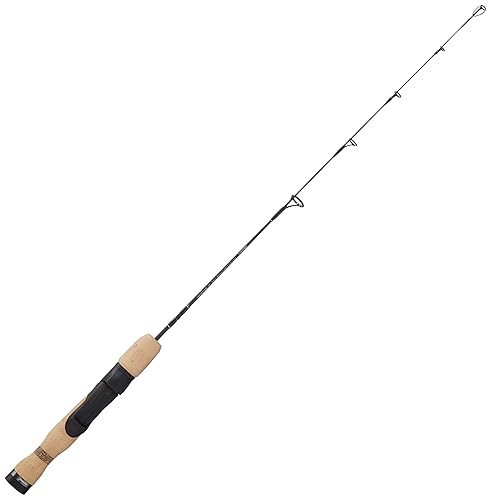
Fiberglass ice fishing rod blanks give you a tough, forgiving base for building a hard-water rod that can take cold, wind and the occasional hard hit from a big fish. This guide walks you through choosing the right blank for your target species, matching power and action to your jigging style, and avoiding the mistakes that make a rod feel dead or break at the wrong moment.
Start With Your Target Species and Fishing Style
Fiberglass blanks are less sensitive than graphite, which is why they suit panfish, perch and aggressive jigging for lake trout. Before you shop, decide what you fish for and how you fish it. A blank built for tiny jigs on bluegill will feel wrong when you are bouncing a heavy spoon for lake trout.
Shopping for one? See our guide: Ice Fishing Rod Blanks Compared: 5 Best for Hard-Water Anglers (2026).
Light and ultralight blanks suit panfish and perch. Medium blanks cover most walleye and crappie work. Medium-heavy and heavy blanks are for trout and larger jigs. If you fish a little of everything, a medium-light blank is the safest all-round starting point.
How to Match Power, Action and Length
- Pick the power. Power describes how much force the blank needs to bend. Match it to the weight of the lure you use most often.
- Pick the action. Fast action bends mostly in the top third and gives quick hook sets. Slow or moderate action bends deeper into the blank and cushions light bites and fighting fish.
- Pick the length. Shorter rods (roughly 24 to 30 inches) are easier to work over a small hole and in a shelter. Longer rods (around 30 to 36 inches) give more line control and better fish-fighting leverage in open water.
- Check the line and lure rating. Manufacturers print a line-weight and lure-weight range on the blank. Stay inside it.
Building the Rod: Components and Setup Steps
Once you have a blank, the build is mostly about the handle, guides and reel seat. Cold weather exposes weak points quickly, so use guides with hard inserts and a secure, tight wrap.
- Reel seat matched to your reel’s foot size
- Cork or foam grip sized to fit your hand
- Stripping guide and smaller tip-top guides with hard inserts
- Thread and epoxy rated for low temperatures
- Cutting tool, sandpaper, measuring tape and a guide-spacing chart
Lay out the guides first, dry-fit them, then wrap and epoxy one at a time. Let each wrap cure fully before you flex the blank. Check the guide alignment by sighting down the rod before the epoxy sets.
Test the Finished Rod Before Ice Time
Flex the rod gently on a bench and check that the tip returns smoothly. Tie on a jig at the lowest weight in the rated range and make a few casts or jigging motions in the house or garage. Problems like a guide wobble or a stiff spot show up far more easily indoors.
Common Mistakes
- Choosing a blank that is too light for the lures you actually throw.
- Ignoring cold-rated epoxy, which can crack or stay soft in freezing air.
- Using graphite-style guide spacing on a fiberglass blank, which changes how load moves through the rod.
- Skipping the dry-fit step and finding a misaligned guide after the epoxy has set.
- Overlooking the reel seat fit, which can loosen under load and strip a fish off the line.
Recommended Gear
- Hard-insert guides for ice: Hard inserts resist grooving from braided and fluorocarbon line in cold conditions. View on Amazon
- Cold-rated rod wrapping epoxy: A cold-cure epoxy keeps wraps sound when the shop is chilly. View on Amazon
- Reel seat and grip kit: A matched seat and grip set speeds up the build and keeps the reel secure. View on Amazon
FAQ
Are fiberglass blanks good for ice fishing?
Yes, for many hard-water jobs. Fiberglass is durable and forgiving, which helps when you fight fish through a small hole or deal with cold-stiffened line.
What power should I choose for a first ice rod?
A medium-light or light power blank covers most panfish and perch work and is easy to learn on. Move heavier once you start targeting larger species.
Do I need special epoxy for cold weather?
Standard epoxy can stay soft or crack in freezing conditions. Use a cold-rated product and build in a warm room where possible. Check the manufacturer’s cure instructions for your specific epoxy.
Conclusion
Choose your fiberglass ice fishing rod blanks by target species, power, action and length, then build with hard-insert guides and cold-rated epoxy. Test the rod indoors before you head out. A carefully matched blank will serve you through many seasons on the ice.
Related reading
- St Croix Ice Fishing Rod Blanks: How to Choose the Right One (2026)
- Ice Fishing Rod Blanks Canada: How to Choose the Right Blank for Hard Water
- Ice Fishing Rod Blank Kits: How to Choose and Build One for Hard Water
- Ice Fishing Noodle Rod Blanks: How to Choose and Build One (2026)
Ready to choose one?
About Audrey Hayes
Audrey Hayes is part of our editorial team and reviews and edits our ice fishing guides, checking product details against manufacturer specifications and owner feedback.