As an Amazon Associate I earn from qualifying purchases. This page may contain affiliate links.
Ice fishing on Red Lake MN is generally safe once the ice reaches at least 4 inches of clear, solid ice, but Minnesota’s largest natural lake freezes unevenly and rarely behaves the same way twice. Check current ice reports from local bait shops and the DNR before every trip, measure thickness yourself, and never assume that the ice near shore is the same as the ice out on the main basin.
Why Red Lake Ice Is Different
Red Lake covers well over 200 square miles, and its depth, current patterns, and inflows from the surrounding rivers create conditions that vary a lot across the ice. Shallow bays often freeze first and thicken quickly, while areas near river mouths, springs, and current breaks can stay thin much later into the season. A spot that held a truck in early January may be open water by mid-February after a warm spell.
Shopping for one? See our guide: 6 Best Gear for Ice Fishing: Expert Picks Compared for Every Need.
Snow cover is another factor. Heavy snow insulates the ice and slows thickening, so a thick snowpack can leave you with weaker ice than you’d expect from the air temperature alone. Wind-blown areas, where snow gets scoured off, often grow thick ice faster.
Factors That Affect Ice Safety
Several things change the thickness and strength of the ice you’re standing on:
- Air temperature history. Sustained subzero stretches build ice far faster than a few cold nights. Thaw cycles followed by refreezing leave weaker, grayer layers.
- Snow depth. Snow acts as insulation and can cut ice growth substantially.
- Current and inflows. Moving water and springs keep ice thin. Stay well away from river mouths and visible open water.
- Ice type. Clear black ice is the strongest. White or snow ice is weaker, roughly about half as strong for the same thickness, according to commonly cited guidance from ice safety organizations.
- Pressure ridges and cracks. These can signal shifting ice and should be approached with caution.
How to Check Ice Thickness on Red Lake
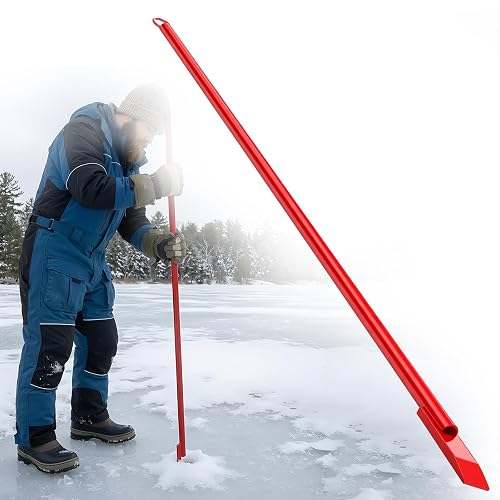
Use an auger or spud bar to test as you walk out, and drill test holes at regular intervals rather than relying on a single measurement. Measure every few steps in new areas. Many anglers use the commonly cited general guideline of 4 inches of clear ice for walking and about 5 to 7 inches for a group of anglers or light vehicles, but Red Lake’s variability means you should confirm conditions locally before trusting any rule of thumb. For vehicle access, consult the Minnesota DNR and local guides, since permitted routes and ice conditions change season to season.
Where Anglers Typically Fish on Red Lake
Ice anglers on Red Lake often target walleye, perch, tullibee (cisco), and northern pike. Walleye and perch often concentrate on structure and transition areas, while pike tend to roam the weedlines and bays. Because the lake is so large, many people use local knowledge or a guide to find productive water. Consider fishing areas with multiple depth changes, and mark your holes with a GPS or a sonar unit so you can return to productive spots.
If you’re comparing options across Minnesota, you may find it useful to read about Lake Mille Lacs MN Ice Fishing: When It's Safe and Where to Go for another large-lake comparison, or Ice Fishing at Lake of the Woods: Where to Go, When, and How for a different style of big-water ice fishing.
Practical Steps Before You Go
- Check the latest Minnesota DNR ice reports and local bait shop updates the same day you travel.
- Drill test holes as you walk and document thickness every 20 to 30 feet in unfamiliar areas.
- Avoid areas with open water, slush, or visible current, especially near inlets.
- Carry ice picks, a throw rope, and a personal flotation device, and wear a float suit if you’re on questionable ice.
- Tell someone your location and expected return time.
- Leave the truck on established, permitted routes and avoid parking near shorelines or springs.
Safety Gear Worth Having
Pick up a set of ice picks, a rope with a float, and a float suit for open-water emergencies. Read about Safety Gear for Ice Fishing: What You Need Before Stepping Onto the Ice for a complete checklist, and see Floating Suit Ice Fishing: How to Stay Afloat If You Break Through the Ice for how a float suit works if you end up in the water.
What we’d use
- A pair of ice picks worn around the neck for quick self-rescue in case of a fall through the ice. View on Amazon
- A throw rope with a flotation bag for helping a companion out of the water. View on Amazon
- A float suit rated for open-water use, worn over your clothing on uncertain ice. View on Amazon
Related questions
How thick should ice be for ice fishing on Red Lake MN?
Four inches of clear ice is the common minimum for walking, but Red Lake’s uneven conditions mean you should measure thickness yourself and confirm with current reports before going out.
When is the best time for ice fishing on Red Lake MN?
Mid-winter, after the ice has built to a safe, consistent thickness, usually offers the most stable fishing. Early and late seasons carry higher risk and should be approached with extra caution.
Do I need a guide for ice fishing on Red Lake MN?
A guide isn’t required, but local knowledge helps a lot on a lake this large. A licensed guide can point you toward safer ice and productive structure.
What fish are caught ice fishing on Red Lake MN?
Walleye, perch, tullibee, and northern pike are the most commonly targeted species, with fishing success varying by location and season.
Is ice fishing on Red Lake MN safe for beginners?
It can be, but beginners should fish with an experienced partner, check conditions carefully, and stick to well-established areas. For medical or emergency concerns related to cold exposure, consult a professional.