As an Amazon Associate I earn from qualifying purchases. This page may contain affiliate links.
An ice fishing flasher is the better choice for anglers who want fast, reliable fish detection and a simple read on whether a fish is hungry and close to their lure. An ice fishing finder, usually a sonar unit with a color LCD and a wider view of the water column, suits anglers who want to see bottom structure, track lures in real time and fish deeper or more varied water. For most ice anglers who fish a single spot through a tip-up or a jigging rod, a flasher still delivers the most useful information per dollar of gear-and-time. Anglers who move often, fish unfamiliar lakes or want to learn structure will get more out of a finder.
Both tools use sonar to send a sound pulse down through the ice and read the echo. The differences come down to how that information is displayed, how much of the water column you can see at once, and how the unit handles battery life and cold weather. The sections below compare them criterion by criterion so you can match the tool to how you actually fish.
Ice Fishing Flasher vs Finder: Side-by-Side Comparison
| Criteria | Ice Fishing Flasher | Ice Fishing Finder (Sonar with LCD) |
|---|---|---|
| Display type | Circular LED or rotating-arm display showing fish as colored arcs or dots | Color or grayscale LCD showing a scrolling graph of depth, fish and bottom |
| Best at | Showing fish, their depth and their reaction to a lure in a narrow cone under the hole | Showing bottom contour, weed beds, suspended fish and lure position over time |
| Target ID and fish arch detail | Fish appear as bright arcs; detail is limited, so distinguishing species is difficult | Fish arches, bait balls and sometimes species-level hints are easier to read on a graph |
| Coverage under the hole | Narrow cone, typically sized for the water directly beneath the transducer | Wider cone, plus a scrolling history of everything that passed through it |
| Learning curve | Low; the display is simple and intuitive for beginners | Moderate; reading graphs and adjusting sensitivity and gain takes practice |
| Power use | Generally low, which suits long days and smaller batteries | Higher, especially with backlit color screens and high-output settings |
| Portability and setup | Compact, quick to deploy, often one hole and one transducer | Larger head unit or screen, sometimes a separate transducer cable, more to set up |
| Cold-weather readability | Display stays readable in low light; few controls to fumble with gloves on | Screens can slow or dim in extreme cold; more buttons and menus to manage |
| Best fit | Stationary anglers, panfish and walleye on known spots, budget-minded buyers | Mobile anglers, structure hunters, lure-watching jiggers and deep-water fishing |
Display and How Information Is Shown: Flasher Wins for Simplicity
A flasher shows fish as bright marks around a circle or along a rotating arm. Each sweep updates the marks, so you see a fish appear, move and leave in a few seconds. The display is intentionally simple. You learn to read it quickly, and you rarely need to interpret a long history of returns.
A finder shows a scrolling graph. Time runs across the screen and depth runs up and down, so you see where the bottom sits, where fish were a minute ago and whether your lure is sitting in the zone where fish are holding. That history is valuable, but it takes some practice. Owners often report that the graph becomes much easier to read after a few outings on a lake they already know.
Winner: Flasher for quick, uncluttered reads. Finder for anglers who want context and history on the screen.
Target Identification and Fish Detail: Finder Wins
Neither tool will tell you with certainty what species you are looking at, but a finder gives you more to work with. Fish arches, the shape of bait balls and the way fish respond to a lure all show up more clearly on a graph. Experienced anglers often use the arch shape and the position relative to bottom to make an educated guess about whether they are looking at perch, walleye or suspended baitfish.
A flasher’s arcs tell you that something is there and how deep it is. That is often enough when you are fishing a known spot for a specific species, but it leaves more room for guessing when the water is unfamiliar.
Winner: Finder, because the graph provides more detail for judging what is below.
Coverage Under the Hole: Finder Wins for Range and Context
Both units send sonar straight down, but the cone of coverage matters. A flasher typically watches a narrow column of water directly beneath the transducer. That is ideal for seeing how a fish reacts to a jigging lure in a specific hole. A finder usually covers a wider cone and records what passes through it over time, which helps you see fish that move in from the side or sit just off the bottom.
For anglers jigging in a tight pattern, the flasher’s focus is a strength. For anglers scanning a larger area of a flat or a break line, the finder gives more to look at.
Winner: Finder for wider coverage and history. Flasher for focused, hole-by-hole work.
Learning Curve and Ease of Use: Flasher Wins for Beginners
Flashers are easy to learn. Turn it on, drop the transducer, and watch the display. Most units have only a few controls, and the main adjustment is sensitivity. Beginners often feel confident after one trip.
Finders reward practice. Gain, sensitivity, zoom, noise reduction and the bottom-lock feature all affect what you see. Manufacturers typically include guides in the manual, and many anglers find that a few hours of testing at home or on a familiar lake pays off. If you are new to electronics, expect a short learning period before the graph feels natural.
Winner: Flasher for anglers who want to start fishing without a long setup routine.
Power Use, Battery Life and Cold Weather: Flasher Wins
Battery life is one of the most practical differences. Flashers generally draw less power because they update a simpler display and often run at lower output. Owners often report getting a full day or more from a modest battery, which matters when you are far from a vehicle or spending a long weekend on the ice.
Finders, especially those with backlit color screens and high-output settings, use more power. Running at lower brightness, reducing the ping rate and carrying a spare battery all help. Cold also affects batteries. Lithium packs hold up better in low temperatures than standard lead-acid batteries, and keeping the battery warm inside a jacket or shelter extends runtime. Always check the manufacturer’s stated operating temperature range before heading out.
Winner: Flasher for longer runtime and simpler cold-weather handling.
Portability and Setup: Flasher Wins for Fast Deployment
A flasher is usually compact. The head unit and transducer pack down easily, and setup often means drilling one hole, lowering the transducer and turning the unit on. That makes it practical for anglers who fish several spots in a day or who walk out on the ice.
Finders can be just as portable, but the larger screens and extra cables take more time to set up. If you plan to use a finder in a shelter, mount it at eye level and plan for cable routing so the transducer stays clear of the hole edge and does not pick up noise from the ice.
Winner: Flasher for anglers who value speed and minimal gear.
Which Should You Choose?
- Choose a flasher if you mostly fish one or two spots, you want an easy-to-read display, and you care about battery life on long days.
- Choose a finder if you move around a lake, you want to see bottom structure and weed edges, or you fish deep water where a history graph helps you track fish.
- Choose a flasher if you are new to electronics and want to learn fish behavior without learning a complex interface first.
- Choose a finder if you jig lures actively and want to see exactly where your bait sits relative to fish and bottom over time.
- Choose a flasher if you are building a basic kit for panfish and walleye on known water and want fewer parts to carry.
- Choose a finder if you fish unfamiliar lakes often and want to map depth, humps and weed beds before you set up.
If you are still deciding, read our guide to Flasher vs Fish Finder for Ice Fishing (2026): Which Should You Choose? for a deeper look at use cases, and our overview of Ice Fishing Flasher vs Sonar (2026): Which Is Better for Hard-Water Anglers? for how the terms are used in the marketplace.
Product Options for Each Category
For a flasher, many anglers start with a well-established unit such as the Vexilar FLX-28 Ice Ranger, which is widely known in the hard-water community. View on Amazon
For a finder, the Garmin STRIKER Plus series is a common choice for anglers who want a color display and a range of sonar features. View on Amazon
Before buying either, read our roundup of Top 9 Fish Flashers for Ice Fishing Picks for Every Need and our list of 6 Best Ice Fishings With a Fish Finder for Hard-Water Anglers (2026) to compare more models.
FAQ
Is a flasher better than a fish finder for ice fishing?
Neither is better in every case. A flasher is simpler and uses less battery, which suits anglers fishing one spot for panfish or walleye. A finder gives more detail, a wider view and a history graph, which suits anglers who move around or want to track lures and structure.
Can a fish finder show whether a fish is biting?
A finder can show fish near your lure and how they react as you move it, which often helps you judge interest. It cannot confirm a bite, so you still need to watch your line or rod tip and set the hook when you feel a strike.
How deep can a flasher or finder read through ice?
Maximum depth depends on the transducer, the water conditions and the unit’s power output. Manufacturers list depth ratings in their specifications, and those figures are the best starting point. Check the stated range against the depth of the lake you plan to fish.
Do I need to drill a specific hole size for either unit?
Most transducers fit through a standard ice auger hole. Confirm the transducer diameter against your auger size before you buy, and make sure the hole is clear of slush so the transducer sits flat and reads cleanly.
What safety gear should I carry when using electronics on the ice?
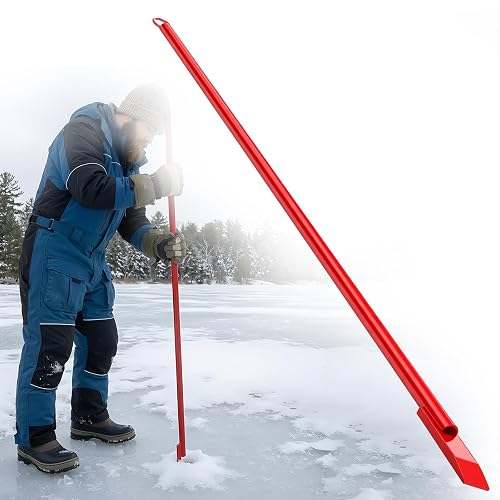
Electronics do not replace ice safety. Carry a spud bar, ice picks, a rope, a whistle and a flotation device, and check ice thickness before you walk out. For a full list, see Safety Gear for Ice Fishing: What You Need Before Stepping Onto the Ice. Ice conditions vary, so consult local authorities or a professional before heading onto any lake.
Conclusion
The ice fishing flasher vs finder decision comes down to how you fish. A flasher gives you a fast, simple, low-power view of fish under one hole, and it is a strong choice for stationary anglers on familiar water. A finder gives you a wider view, a history of what has passed through the cone and more detail on structure, which makes it better for anglers who move, explore or jig actively. Match the tool to your water and your habits, and you will get more out of every hole you drill.