As an Amazon Associate I earn from qualifying purchases. This page may contain affiliate links.
Boots for ice fishing have one job that matters more than almost anything else: keeping your feet warm and dry while you stand still on frozen water for hours. Cold feet end trips early, and wet feet can turn a pleasant morning into a miserable walk back to the truck. The right pair needs reliable waterproofing, real insulation rated for sub-zero temperatures, a sole that grips snow and ice, and enough room for thick socks without cutting off circulation. This guide compares nine options across those criteria, using manufacturer specifications, brand reputation and common owner feedback patterns. None of these picks were tested by us, so check current listing details before you buy.
Our Top Picks
Quick Comparison
| Product | Best for | Key feature |
|---|---|---|
| NORFIN Klondike 2 Winter Boots | Anglers who walk on slick ice | Retractable ice cleats |
| MUCK Men’s Arctic Ice Mid Waterproof Snow Boots | Wet, slushy conditions | Fully waterproof rubber build |
| NORTIV 8 Men’s Waterproof Winter Snow Boots Insulated | Budget-minded winter use | Insulated waterproof shell |
| Men’s Ice Grip Snow Boots, 3M Insulated Winter Boots Waterproof | Long sits in deep cold | 3M Thinsulate insulation |
| Hunthor Hunting Boots for Men with 1600g Insulation | Very cold, static days | 1600g insulation, -20°F rating |
| ROCKY Retraction Waterproof 800G Insulated Outdoor Boot | Mixed walking and sitting | Retractable ice traction |
| TIDEWE Rubber Work Boots for Men and Women | Budget rubber boot seekers | 6mm neoprene, reinforced toe |
| Simms Men’s Challenger Insulated Boot | Anglers wanting a premium build | Insulated, rugged outdoor design |
| ALEADER Men’s Winter Waterproof Insulated Shell Warm Inner Snow Boots | Comfort-first winter wear | Warm inner lining, waterproof shell |
NORFIN Klondike 2 Winter Boots for Fishing, Hunting and Hiking

NORFIN Klondike 2 -Winter Boots for Fishing, Hunting and Hiking – Anti Slip – Retractable ice Cleats for Added Safety and Protection – Made of EVA Material – Removable Insole
These boots suit anglers who spend a lot of time walking between holes and need better footing on glare ice than standard winter boots provide. The retractable cleats are the main reason to consider them.
Key specs
- Retractable ice cleats for added traction
- EVA construction
- Removable insole for drying and fit adjustment
Pros
- Cleats help with footing on slick ice and hard-packed snow
- Removable insole makes drying out easier after a wet day
- Lightweight compared with heavy insulated pac boots
Cons
- Owners often report they are less warm for long periods of sitting than heavier insulated options
- Sizing can run tight for people wearing thick wool socks
MUCK Men’s Arctic Ice Mid Waterproof Snow Boots

MUCK Men's Arctic Ice Mid Waterproof Snow Boots
Best for anglers who fish in slush, wet snow or open-water edges where keeping water out matters most. The rubber construction is the selling point.
Key specs
- Mid-height shaft
- Waterproof rubber construction
- Designed for winter wet conditions
Pros
- Strong waterproofing for slush and wet ice edges
- Easy to clean after a messy day on the ice
- Mid height keeps snow out of the top
Cons
- Rubber can feel stiff and less flexible for long walks
- Owners often report that feet can get cold in extreme sustained cold without added socks or liners
NORTIV 8 Men’s Waterproof Winter Snow Boots Insulated

NORTIV 8 Men's Waterproof Winter Snow Boots Insulated
A practical choice for anglers who want a waterproof, insulated winter boot without paying for a specialized ice-fishing build. It fits casual ice trips and general winter outdoor use well.
Key specs
- Waterproof outer construction
- Insulated lining for winter use
- Lace-up closure
Pros
- Good value for occasional ice anglers
- Lace-up design allows a snug, adjustable fit
- Comfortable for walking on snow
Cons
- Owners often report lower insulation than dedicated extreme-cold boots
- Traction on glazed ice may be limited without added cleats
Men’s Ice Grip Snow Boots, 3M Insulated Winter Boots Waterproof
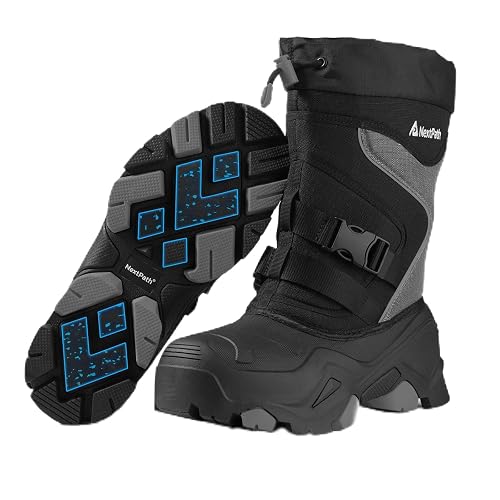
Men's Ice Grip Snow Boots, 3M Insulated Winter Boots Waterproof
Suited to anglers who sit for long stretches in cold weather and want insulation as the priority. The 3M insulation is the defining feature in the listing name.
Key specs
- 3M Thinsulate insulation
- Waterproof construction
- Ice grip outsole for winter traction
Pros
- Insulation suits static cold-weather sitting
- Grip sole helps on packed snow and ice
- Waterproof build protects against slush
Cons
- Heavier than lightweight winter boots, which can tire you on long walks
- Sizing guidance should be checked carefully for wide feet
Hunthor Hunting Boots for Men with 1600g Insulation

Hunthor Hunting Boots for Men with 1600g Insulation, -20°F Rated Men Boots
Built for anglers who spend hours in very low temperatures and want maximum warmth. The 1600g insulation rating and -20°F comfort figure in the listing name point to a heavy-duty winter boot.
Key specs
- 1600g insulation
- Rated to -20°F per listing
- Designed for hunting and cold-weather outdoor use
Pros
- Heavy insulation suits very cold, static days
- Cold-rated design suits deep-winter anglers
- Works for hunting and fishing crossover use
Cons
- Bulk and weight can be tiring for active walking
- Owners often report they run warm, so they may be too much for mild days
ROCKY Retraction Waterproof 800G Insulated Outdoor Boot

ROCKY Retraction Waterproof 800G Insulated Outdoor Boot
A balanced option for anglers who alternate between walking and sitting and want traction that can be adjusted. The retraction feature is the key differentiator.
Key specs
- 800g insulation
- Waterproof construction
- Retractable traction system
Pros
- Retractable traction helps on ice and then tucks away on snow
- 800g insulation offers moderate warmth for most winter days
- Waterproof build handles wet conditions
Cons
- Retraction mechanism needs periodic checking for wear
- Not as warm as heavier insulation for extended sub-zero sitting
TIDEWE Rubber Work Boots for Men and Women, Waterproof Rain Boots

TIDEWE Rubber Work Boots for Men and Women, Waterproof Rain Boots | 6mm Neoprene Hunting Boots for Arctic Outdoor Use, Heat-Retaining Insulation Winter Boots with Reinforced Toe
A budget-friendly rubber boot for anglers who prioritize waterproofing and a reinforced toe over high-end insulation. It works well for wet ice edges and slush.
Key specs
- 6mm neoprene lining per listing
- Waterproof rubber construction
- Reinforced toe
Pros
- Neoprene lining retains heat in moderate cold
- Reinforced toe adds protection around gear and ice
- Rubber construction handles wet conditions well
Cons
- Owners often report they are less suited to extreme cold than dedicated winter boots
- Rubber can be stiff and less comfortable for all-day walking
Simms Men’s Challenger Insulated Boot

Simms Men's Challenger Insulated Boot
Suited to anglers who want a premium-quality boot from a brand known for outdoor fishing gear. It fits serious hard-water use where durability matters.
Key specs
- Insulated construction
- Outdoor fishing-oriented design
- Durable build for rugged use
Pros
- Brand reputation in fishing gear supports durability expectations
- Insulated design suits cold fishing days
- Rugged build holds up to repeated trips
Cons
- Typically positioned at a premium level, which may not suit every budget
- Owners may want to add ice cleats for slick surfaces
ALEADER Men’s Winter Waterproof Insulated Shell Warm Inner Snow Boots

ALEADER Men's Winter Waterproof Insulated Shell Warm Inner Comfortable Outdoor Snow Boots
A comfort-focused winter boot for anglers who want a warm inner lining and waterproof shell for casual ice days. It is a good match for lighter, shorter sessions.
Key specs
- Waterproof shell
- Warm inner lining
- Insulated winter construction
Pros
- Comfortable inner lining for shorter trips
- Waterproof shell keeps snow and slush out
- Generally lighter than heavy-insulation boots
Cons
- Owners often report lower warmth for long sitting in deep cold
- Traction on glare ice may need supplemental cleats
Buying Guide
Choosing boots for ice fishing comes down to a few measurable factors. Start with the conditions you fish most often: sub-zero static sitting calls for heavier insulation, while walking across variable ice favors lighter boots with better traction. Waterproofing matters everywhere, but it matters most near open water, slush and melt zones.
Selection criteria
- Waterproofing: Look for fully waterproof construction, not just water-resistant uppers. Rubber or sealed synthetic shells are the usual approach.
- Insulation: Insulation is usually listed in grams (such as 800g or 1600g) or as a material like Thinsulate. Heavier ratings generally mean warmer boots for static use.
- Traction: Ice cleats, retractable spikes or aggressive lug soles help on glare ice. Retractable systems offer flexibility between walking and sitting.
- Fit and room: Leave enough space for thick socks or liners. Tight boots compress insulation and restrict blood flow, which accelerates cold feet.
- Comfort rating: Some manufacturers list a temperature rating such as -20°F. Treat these as guidelines, since activity level and sock choice change how warm you feel.
Important features
- Removable insoles make drying easier after wet days
- Reinforced toes protect against dropped augers and gear
- Lace-up or boa closures allow a secure fit over thick socks
- Mid-height or taller shafts keep snow and slush out
Specs to check
Before buying, confirm the insulation rating, the waterproof construction, the sole type and the shaft height. Check the manufacturer’s sizing chart and compare it with your usual shoe size, especially if you plan to wear wool socks or foot warmers.
Choosing by need
- Long static sitting in deep cold: Prioritize heavy insulation such as the higher-gram options listed above.
- Lots of walking on glare ice: Prioritize retractable cleats or strong lug soles over maximum insulation.
- Slush and wet ice edges: Prioritize full rubber or sealed waterproof construction.
- Occasional trips on a budget: A lighter insulated waterproof boot can cover mild winter days well.
Things to watch out for
- Water-resistant is not the same as waterproof. Check the listing wording.
- Oversized boots can trap cold air and reduce heat, so avoid buying extra-large without a reason.
- Cold-rated boots still lose heat if your socks are damp. Carry a spare pair.
- Ice cleats wear down over time. Inspect them before each season.
FAQ
What temperature rating should I look for in boots for ice fishing?
Manufacturers often list comfort ratings such as -20°F. These are estimates for static use with appropriate socks. If you sit for hours in very cold conditions, choose a heavier insulation rating. For active use, a moderate rating is usually enough.
Are rubber boots better than leather for ice fishing?
Rubber boots are generally more waterproof and easier to clean, which helps near slush and open water. Leather can be comfortable but needs more care to stay dry. Many anglers prefer synthetic or rubber shells for hard-water use.
Do I need ice cleats on my boots?
If you walk on glare ice or steep banks, cleats or aggressive soles add real safety. Retractable cleats are a good compromise because they can be pulled back on snow and carpet for comfort. Check the cleats regularly.
How should I size boots for ice fishing?
Measure your foot and compare it with the manufacturer’s chart. Plan for the socks you will actually wear. Boots should fit snugly without pinching the toes or restricting circulation. Try them on later in the day when your feet are slightly swollen.
How do I keep my feet warm in cold boots?
Wear moisture-wicking base layers and wool or synthetic socks, avoid cotton, and keep spare dry socks in your gear bag. Foot warmers and removable insoles also help. Keeping your boots dry matters more than any single feature.
Can I use hunting boots for ice fishing?
Yes, many insulated hunting boots work well for ice fishing because they share similar needs: waterproofing, warmth and durable soles. Check the insulation rating and traction features against your typical fishing conditions.
Conclusion
For long sits in extreme cold, the heavier insulated options such as the Hunthor and the 3M-insulated Ice Grip boot make the most sense. If your priority is traction on glare ice, the NORFIN Klondike 2 and ROCKY retractable boot stand out. Anglers who face slush and wet edges will appreciate the MUCK and TIDEWE rubber builds. The Simms Challenger suits those wanting a premium build, while the NORTIV 8 and ALEADER offer comfortable, lighter-duty winter options. Match the boot to your most common conditions, and when in doubt, prioritize waterproofing and a secure, roomy fit.
For more gear ideas, see Safety Gear for Ice Fishing: What You Need Before Stepping Onto the Ice and Tools for Ice Fishing: 9 Essentials Every Hard-Water Angler Needs. If you are weighing a specific brand, Korker Ice Fishing Boots: A Step-by-Step Guide to Choosing and Using Them and Ice Fishing Boots Baffin: How to Choose the Right Pair for Cold Days on the Ice offer more detail.