As an Amazon Associate I earn from qualifying purchases. This page may contain affiliate links.
The right tools for ice fishing make the difference between a frustrating morning and a productive one. By the end of this guide, you will know which items are essential, which are nice to have, and how to pack, check, and use them safely on the ice. The list below covers drilling, clearing, shelter, sight, presentation, and safety, so you can build a kit that fits your lake, your target species, and your budget.
Start With Safety Tools Before Anything Else
Ice thickness decides everything else you bring. Before you drill a single hole, your first tools should be the ones that keep you out of the water. Most state fisheries agencies publish general guidelines, but a common working rule is about 4 inches of clear, solid ice for walking, 5 to 7 inches for a small group of anglers, and 8 to 12 inches for a snowmobile or small all-terrain vehicle. Those numbers assume clear, hard ice. Snow-covered or slushy ice can be much weaker, and moving water, inlets, and areas near culverts are always suspect. Consult your local conservation office or a professional guide for conditions on your specific water.
Shopping for one? See our guide: Ion Electric Ice Auger Battery Review: Features and Performance.
Carry these safety tools every time you go out:
- Ice picks worn on a cord around your neck. If you break through, driving them into the ice lets you pull yourself out.
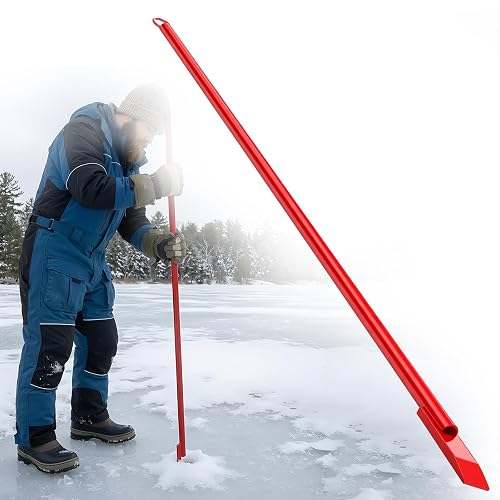
- A spud bar or chisel for testing ice thickness as you walk, especially near shore and on new ice.
- A throw rope or rescue line at least 50 feet long, stored where you can reach it without digging.
- A flotation suit or float coat, which buys you critical time if you go through.
- A whistle or personal locator beacon so others can find you.
Drilling Tools: Augers and Their Accessories
A reliable auger is the core of most hard-water setups. Hand augers are simple and quiet, and they work well for panfish in shallow water. Gas and electric augers drill faster and make sense when you plan to bore dozens of holes or fish deeper water where ice is thicker. The auger you choose should match your drilling volume and your ice thickness, since a short blade will not get through much ice.
When comparing augers, check these details:
- Blade length and diameter. Most anglers use 6 to 8 inch diameter for panfish and 8 to 10 inch for larger species such as lake trout or walleye.
- Power source. Battery-powered units need charged packs, and it helps to bring a spare in cold weather because batteries lose capacity when chilled.
- Blade sharpness. Dull blades stall and waste energy. Keep a file or sharpening tool handy.
If you are comparing hand models, see our roundup of Best Hand Ice Augers. For electric options, Ion Ice Auger Battery Review: Features, Pros and Cons (2026) explains what to look for in battery performance, and K Drill Ice Auger: How to Use One Safely and Efficiently (Step-by-Step) walks through safe operation. If you drill with a cordless drill, an adaptor makes the job easier. Ice Auger Drill Adaptor Guide: How to Choose and Use One Safely covers the fit and safety points.
Clearing Tools: Skimmers and Ice Scoops
Every hole refreezes or collects slush within minutes in cold weather. A skimmer (a mesh or perforated scoop on a handle) removes slush, shavings, and small chunks so your hole stays open and your bait is visible. Keep one skimmer per hole in use, and clear them between drops rather than letting them fill up.
Sight and Detection Tools
Knowing what is under the ice saves time. An underwater camera lets you see fish approach your bait, judge whether they are interested, and adjust your jigging. A sonar or flasher unit shows depth, bottom structure, and fish arches on a display. Flashers are the traditional choice for many hard-water anglers, while sonar units with cone-shaped coverage help you read fish at different depths. A bit of practice helps you learn to tell a fish arch from bottom clutter or weed growth. Our guide to 10 Best Ice Fishing Flashers compares the main display options.
Rods, Reels, and Presentation Tools
Your rod and reel control how your bait moves, which matters as much as the bait itself. Short, sensitive ice rods help you feel light bites on jigs, while tip-ups suit fishing for larger predators by letting a live bait sit still at a set depth. Keep a few sizes of jigs in your box, since changing weight and profile can be the difference between a slow day and a fast one.
Useful presentation tools include:
- Tip-ups for tip-up fishing for pike, walleye, and trout. Check local rules on how many you may fish at once.
- A jig assortment covering a range of weights and colors for panfish and perch.
- Line and leader material appropriate to your target. Lighter line suits panfish; heavier braid or fluorocarbon suits pike and toothy species.
For rod and reel choices, see Best Ice Fishing Rods and Best Ice Fishing Reels. For tip-up options, check Best Ice Fishing Tip-Ups. Jig selection is covered in Best Ice Fishing Jigs.
Shelter, Transport, and Comfort Tools
A shelter keeps wind off your hands and bait, and it changes how long you can comfortably stay. Pop-up shelters are the most common choice because they set up quickly, though weather and wind rating matter when you pick one. Sleds haul your gear across the ice, saving your back on long walks. A heater, used with proper ventilation, extends your session in cold snaps. Gloves protect your hands during rigging and fish handling, and cold hands are the most common reason anglers pack up early.
Look at Best Ice Fishing Shelters for shelter options, Best Ice Fishing Sleds for hauling gear, 25 Best Ice Fishing Heaters if you want heat, and Best Ice Fishing Gloves for hand protection.
Packing Checklist
Use this list before every trip. Adjust it for your target fish and the number of anglers you are bringing.
- Ice picks, spud bar, rescue rope, and flotation gear
- Auger with spare blades or a sharpening file
- Skimmer or scoop for each active hole
- Rods, reels, line, and a spare spool
- Jig and bait assortment, plus a small tackle organizer
- Flasher, sonar, or underwater camera with charged batteries
- Shelter, stakes, and a pack or sled to carry them
- Heater, fuel or batteries, and carbon monoxide detector if using combustion heat indoors
- Gloves, warm hat, and layers rated for wind
- Hot drinks, snacks, and a first aid kit
- Fish gripper, measuring device, and cooler if you plan to keep fish
Common Mistakes
- Trusting ice thickness from one spot. Ice varies from cove to cove. Test as you walk, and recheck after warm spells.
- Going out alone without a plan. Tell someone your location and return time.
- Running an auger or heater with dead batteries or poor ventilation. Carry spares, and never run a combustion heater in an enclosed space without a CO detector.
- Letting holes freeze over. Clear them regularly so you can see your line and get a bite-ready presentation.
- Ignoring local regulations. Limits on lines, tip-ups, and fish size differ by water body.
Recommended gear
These items match the most common needs covered above. Look for the exact models that suit your auger size, rod length, and shelter footprint.
- Ice picks on a cord. They are small, cheap to replace, and the single most important self-rescue tool on the ice. View on Amazon
- A fine-mesh ice skimmer. It clears slush quickly and keeps holes open between drops. View on Amazon
- An ice fishing sled. Hauling gear on a sled reduces strain on long walks to remote spots. View on Amazon
- A portable flasher unit. A display showing depth and fish arches helps you target active fish. View on Amazon
FAQ
What is the most important tool for ice fishing?
Safety gear is the most important category. Ice picks, a rescue rope, and flotation clothing protect you if the ice fails, and they matter more than any fishing tool.
Do I need an auger, or can I use a spud bar?
A spud bar or chisel works for testing ice and making small holes in thin ice, but an auger is far more efficient for drilling through thicker ice. Most anglers carry both.
How thick should ice be before I walk on it?
A common guideline is about 4 inches of clear, solid ice for walking. Snow, slush, currents, and seasonal changes can make ice weaker than it looks, so check local conditions and test as you go.
What size auger should I buy?
Six to eight inch diameter augers suit panfish and general use. Larger species often call for 8 to 10 inch holes. Match the blade size to the fish you target.
Is a flasher better than a camera?
They do different jobs. A flasher shows depth, structure, and fish presence, while a camera shows you how fish react to your bait. Many anglers use a flasher to find fish and a camera to refine presentation.
Can I use a heater inside a shelter?
Only with proper ventilation and a carbon monoxide detector. Combustion heaters produce carbon monoxide, which can be fatal in enclosed spaces. Consult the manufacturer’s instructions and a qualified professional before using any heater in a shelter.
How often should I clear my holes?
Check holes every 10 to 20 minutes in cold weather and clear slush or ice as needed. Keeping the hole open helps you see your line and keeps bait in the strike zone.
Conclusion
Start with safety gear, then build your drilling, clearing, and presentation kit around the species and water you fish most. Keep a packing checklist, test ice as you walk, and check local regulations before each trip. With the right tools for ice fishing packed and ready, you will spend more time catching fish and less time fighting cold, slush, and avoidable risk.