As an Amazon Associate I earn from qualifying purchases. This page may contain affiliate links.
An ice fishing float suit is a one-piece or two-piece insulated suit built with buoyant foam or inflatable chambers so that you stay near the surface if you break through the ice. This guide explains how these suits work, how to judge buoyancy, warmth, and fit, and how to wear one safely on the ice. By the end, you should be able to pick a suit that fits your fishing style and know what to do in the first minute after a fall.
What an Ice Fishing Float Suit Does (and Doesn’t Do)
A float suit does not make ice safer, and it does not replace good ice judgment. What it does is give you buoyancy so your head and torso stay above water while you work to get out. Cold water shock, not drowning alone, is the main early threat when you go through, and cold water shock can cause gasping and loss of breath control within seconds. A float suit helps you keep your face out of the water during that window.
Shopping for one? See our guide: Ion Electric Ice Auger Battery Review: Features and Performance.
Most suits are designed for use in open-water-adjacent conditions such as lakes and rivers, and they are commonly paired with ice picks, a rope, and a cell phone in a waterproof bag. Manufacturers typically specify a buoyancy rating in pounds of lift, and a higher number generally means more flotation, though bulk and warmth trade off against it.
How to Choose an Ice Fishing Float Suit: 7 Factors
When shopping for an ice fishing suit that floats, these are the factors that matter most. Work through them in order and you will narrow the field quickly.
- Buoyancy rating. Look for a stated lift figure from the manufacturer. Some suits rely on closed-cell foam, others use an inflatable collar or bladder that you activate manually or automatically. Automatic activation is useful if you may be unconscious or disoriented, but it can also deploy by accident, so know which type you are buying.
- Insulation and warmth. A float suit has to keep you warm in air and wet conditions. Check whether the insulation is synthetic (which keeps some loft when damp) or down (which loses warmth when wet). Many anglers layer a base and mid layer under the float suit.
- Fit and freedom of movement. You need to kneel over a hole, reach into a bucket, and swing a rod without restriction. Try the suit with the layers you will actually wear. Oversized suits trap air and can feel warm but make movement clumsy.
- Waterproofing and seams. Look for sealed or taped seams and a durable outer shell. Wet snow, slush, and spray are constant on the ice, and water getting in through seams defeats insulation.
- Zippers and closures. A storm flap over the main zipper keeps wind and snow out. Some suits have zippers that are easier to operate with gloves on, which matters when you need to get out of the suit quickly.
- Pockets and gear access. Chest and thigh pockets should hold a phone, licence, and small tools without you unzipping the whole suit. Pockets that sit low or flap open can dump gear onto the ice.
- Visibility and signaling. Bright colors help rescuers spot you on snow and white ice. Reflective trim adds visibility at dusk.
Buoyant Foam vs. Inflatable Designs
Foam designs are always buoyant, need no action, and handle impact well. Their drawback is bulk and heat retention. Inflatable designs are slimmer and can feel more comfortable on long days, but they depend on a working inflator and a CO2 cartridge or manual tube. Owners often report that inflatable systems should be tested at home so you know how they behave with your gloves on.
Float Suit Checklist for Ice Fishing
Before you head out, run through this list. It takes a few minutes and covers the situations that go wrong most often.
- Confirm the suit fits over your base and mid layers with room to bend and kneel.
- Check that all zippers run smoothly and the storm flap seals.
- If inflatable, check the cartridge, inflator, and bladder for leaks or damage.
- Keep a whistle, ice picks or ice claws, and a short rope in an outside pocket.
- Store your phone in a waterproof pouch inside a pocket you can reach with gloves on.
- Tell someone on shore your location and expected return time.
- Check local ice thickness reports before you walk out.
How to Use a Float Suit Safely on the Ice
Using a float suit well is mostly about habits you build before anything goes wrong. Follow these steps every time you go out.
Step 1: Test the Ice Before You Commit
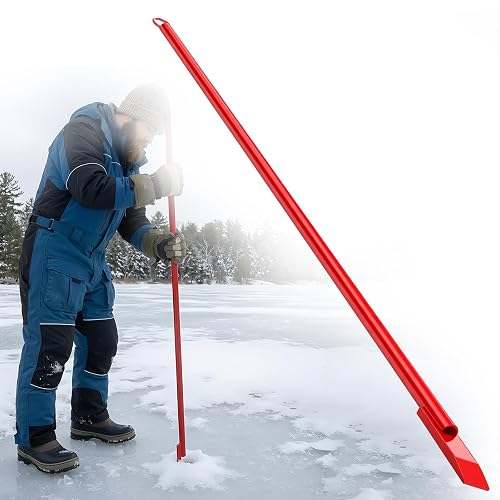
Measure ice thickness with an auger or spud bar at multiple points. Clear, dense ice is stronger than white or snowy ice of the same thickness. Many anglers use a general guide of at least 4 inches of clear ice for walking, but conditions vary widely, so check current local advice rather than relying on a single number.
Step 2: Dress Before You Walk Out
Put the suit on in a warm vehicle or at the shoreline, not after you are already on the ice. Zip the flap, adjust the cuffs, and confirm the pockets are closed. Walking out in a suit you have not checked is a common mistake.
Step 3: Know Your Self-Rescue Sequence
If you break through, the usual sequence is: stay calm, kick your legs to keep your body horizontal, spread your arms onto the ice edge, and use your picks to pull yourself up. Once out, roll away from the hole, not toward it. Get to shore, remove wet layers, and warm up gradually. Anyone who has gone through the ice should be checked by a medical professional, because cold exposure and hypothermia can develop after the event.
Step 4: Practice Getting Out of the Suit
Wet float suits and layers can be heavy. Practice unzipping and sliding out of the suit at home so you can do it quickly with cold, numb hands if needed.
Common Mistakes With Float Suits
- Buying on warmth alone. A warm suit without buoyancy does not protect you on the ice, and a buoyant suit that is too thin will leave you cold.
- Wearing a suit that is too tight. Compressed insulation loses loft and makes movement harder.
- Ignoring maintenance. Salt, grit, and freezing can damage zippers, seams, and inflator parts. Rinse and dry after each trip.
- Assuming the suit makes the ice safe. The suit buys seconds, not safety. Ice checks and a partner matter more.
- Carrying gear loose. Items that fall out of pockets during a fall can be lost or can pull you off balance.
Recommended gear
These items pair well with a float suit and address common needs on the ice. Specific models vary by season and availability, so search for them and compare specifications directly.
- Ice picks or ice claws: Hand-held picks give you grip on the edge of a hole and are essential for self-rescue. View on Amazon
- Waterproof phone pouch: Keeps your phone usable and dry for emergency calls. View on Amazon
- Ice cleats or traction spikes: Improve footing on slick ice and while walking off after a fall. View on Amazon
- Rescue rope or throw bag: Useful for assisting a companion who goes through. View on Amazon
FAQ
Does an ice fishing float suit keep you warm?
Most float suits are designed to provide insulation as well as buoyancy, but warmth depends on the fill, the shell, and what you wear underneath. Layering a base and mid layer usually matters more than the suit alone.
Can I wear a float suit while driving?
Many people find bulky suits restrict steering and seatbelt use. Check comfort and safety in your vehicle, and remove the suit or open it for driving if it interferes with either.
How long does float suit buoyancy last?
Foam buoyancy is generally durable, but compression, damage, and age can reduce it. Inflatable systems depend on the inflator and cartridge, which should be inspected and replaced according to the manufacturer’s instructions.
Should I wear a float suit even if I only fish near shore?
Shoreline ice can still break through, especially near inlets, moving water, or areas with springs. A float suit is a reasonable precaution any time you are walking on ice.
Are float suits the same as life jackets?
No. Float suits are built for ice fishing comfort and movement, while life jackets are designed for open water and specific buoyancy standards. Check the suit’s stated rating and do not assume it performs like a dedicated life jacket.
Can I use a float suit for other winter activities?
Some anglers wear them for snowmobiling near open water or for winter boating. Confirm the suit is suited to that activity and that you understand its limits.
Do I need training to use one?
Basic ice safety courses offered by local fish and wildlife agencies or rescue groups cover self-rescue and cold water response. Consider one if you spend a lot of time on the ice, and consult a professional for medical concerns after cold exposure.
How should I store a float suit between seasons?
Dry it completely, store it loosely in a cool, dry place away from direct sun, and check inflatable components before the next season.
Conclusion
An ice fishing float suit gives you buoyancy and warmth, which buys precious seconds if you go through the ice. Choose one based on its stated lift, insulation, fit, and waterproofing, and pair it with picks, a rope, and a waterproof phone. Most of your safety still comes from checking ice thickness, fishing with a partner, and practicing your self-rescue before you need it.