As an Amazon Associate I earn from qualifying purchases. This page may contain affiliate links.
Ice fishing at Lake of the Woods is a serious undertaking that rewards planning. The lake spans roughly 1.5 million acres across Minnesota and Ontario, with thousands of islands and bays. Anglers chase walleye, sauger, perch, and northern pike through the winter, but the sheer size of the lake means you need to know where you are going, how thick the ice is, and what the bite looks like before you leave the truck.
Why Lake of the Woods Is Different From Smaller Lakes
Most ice fishing lakes in the Upper Midwest can be learned in a season or two. Lake of the Woods is not one of them. The lake covers a massive area, and its ice behaves differently from one basin to the next. Wind, current, spring-fed springs, and the depth changes around Big Traverse Bay and the Northwest Angle all affect when ice forms and how thick it gets. A spot that is safe in early January may be marginal three weeks later after a warm spell.
Shopping for one? See our guide: Ion Electric Ice Auger Battery Review: Features and Performance.
The lake also has a large open-water component. Currents near inlets and narrows can keep ice thin or prevent it from forming altogether, so a flat, white-looking surface does not guarantee safe travel. Experienced anglers treat every crossing as a fresh measurement.
Factors That Control Your Trip
Ice Thickness and Safety
General guidance for hard water is 4 inches of clear, solid ice for walking, 5 to 7 inches for a snowmobile or ATV, and 8 to 12 inches for a light truck. Lake of the Woods can vary sharply from these numbers, so measure at every access point and along your route. Clear ice is far stronger than snow-covered or slushy white ice, which can be half as strong at the same thickness. Always check local advisories from the Minnesota DNR and Ontario authorities before you go, and consult a professional guide if you are unsure about conditions.
Access and Travel Routes
Many anglers reach the main fishing areas by vehicle over plowed or marked routes. Others use ice roads or fly in to remote camps. Stay on marked trails, carry ice picks and a flotation device, and never travel alone on unfamiliar ice. Leave a float plan with someone onshore that includes your route and return time.
Target Species and Where They Hold
Walleye and sauger are the headline fish. Early in the season they tend to relate to structure such as rock humps, weed edges, and points in moderate depths. As the winter progresses, many fish move to deeper basins or stay near the same structure but suspend at different heights. Perch are often found in shallower bays and along weed lines, while northern pike roam wider areas and respond well to tip-ups set with large suckers or cisco.
Weather, Light, and Timing
Low-light periods around dawn and dusk often produce the most active feeding for walleye. Wind can quickly shift fish location, so watch how the bite changes when a front moves through. Snow cover on the ice blocks light and can slow the bite, so some anglers clear a small area to improve visibility for the fish.
What to Do About It: Practical Steps
- Check current ice reports and local fishing reports before every trip.
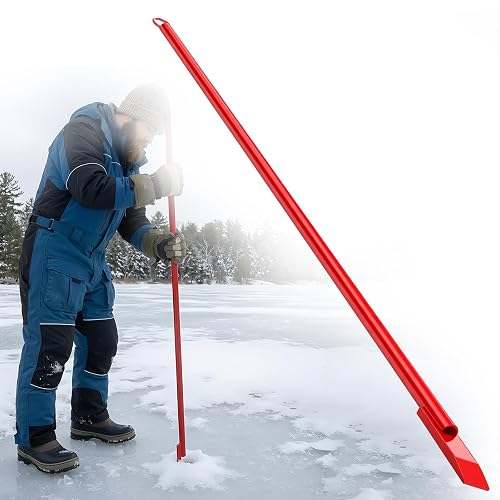
- Measure ice thickness at each new location with a spud bar or auger, not just once at the launch.
- Pick two or three structure-based spots, such as a rock hump or weed edge, and drill a grid of holes rather than fishing a single hole.
- Use a flasher or sonar unit to find suspended fish and track bait fish.
- Keep your shelter and gear organized so you can move quickly if the bite changes or conditions worsen.
- Pack rescue gear, including ice picks worn around the neck, a rope, and a dry change of clothes.
What We’d Use
A sturdy sled makes moving gear across large expanses of ice far easier. Look at the Best Ice Fishing Sleds for options suited to long hauls. For covering multiple spots, a set of Best Ice Fishing Tip-Ups lets you watch for pike while you jig for walleye. A reliable auger is also essential, and a Best Hand Ice Augers guide can help you choose one that fits your drilling needs.
Consider a flasher for locating suspended fish, and check the 10 Best Ice Fishing Flashers roundup for models that match your budget and fishing style. Pair your electronics with a suitable rod and reel from the Best Ice Fishing Rods and Best Ice Fishing Reels lists.
Some angler setups and tips for Lake of the Woods: View on Amazon and View on Amazon.
Related Questions
How thick should ice be at Lake of the Woods?
Aim for at least 4 inches of clear ice for walking and 8 inches or more for vehicles. Measure often, since thickness varies across the lake.
What is the best species to target there in winter?
Walleye and sauger are the most sought after, with perch and northern pike also providing strong action depending on the area.
Do I need a guide for ice fishing on Lake of the Woods?
A guide is not required, but the lake is large and conditions change quickly. Many visiting anglers hire a local guide for their first trip.
When is the best time for ice fishing on Lake of the Woods?
Mid-winter through late winter often offers consistent action, though exact timing depends on ice formation and weather each season.
What safety gear should I bring?
Bring ice picks, a rope, a flotation device, a first-aid kit, and a way to communicate. Share your route and return time with someone onshore.