As an Amazon Associate I earn from qualifying purchases. This page may contain affiliate links.
Safety gear for ice fishing is what separates a good day on the lake from a dangerous one. The right combination of ice picks, flotation, rescue tools and a few basic habits lets you judge the ice, respond quickly if you break through, and get back to shore. This guide walks through the core items, how to use them, and the mistakes that cause most ice accidents.
Why Dedicated Safety Gear Matters on Ice
Ice thickness is never uniform. Currents, springs, snow insulation, aerated zones and shoreline inlets can all create weak spots within a few feet of solid ice. Falling through rarely feels like a slow event. Cold water shock can make it hard to breathe or move within the first minute, and heavy winter clothing soaks up water quickly. Gear that you can reach with one hand, and that works when your hands are numb, is the goal.
Shopping for one? See our guide: Ion Electric Ice Auger Battery Review: Features and Performance.
Essential Safety Gear for Ice Fishing
Most experienced hard-water anglers carry the same core kit. Each item has a specific job, so it is worth understanding what each one does before you buy.
Ice Picks (Ice Claws)
Ice picks are two handheld spikes, usually on a short cord worn around the neck, that let you pull yourself out of a hole. Their value comes from the way they grip the ice as you pull forward, while the spikes dig in with each reach. Keep them accessible: around your neck or in a jacket pocket, never zipped inside a bag you may not reach in time.
Flotation Suit or Life Vest
A flotation suit or inherently buoyant ice-fishing suit keeps your head above water and reduces the energy needed to stay afloat while you work your way out. A standard inflatable life jacket with an automatic or manual inflation feature is another option, though manufacturers generally recommend choosing a model rated for cold-water use. Flotation is most valuable when worn all the time on the ice, not packed in a sled.
Rescue Rope and Throw Bag
A throw rope with a bag, usually 50 feet or more, lets a companion reach you without stepping onto weak ice. Attach one end to a fixed point or hold it firmly, and keep the bag ready near your gear. Practice throwing it on land so the first attempt is not in a panic.
Ice Cleats and Traction Aids
Cleats slipped over boots give traction on glare ice and reduce falls while walking to and from your spot. They do not protect you from breaking through, but a fall on hard ice can cause injury or leave you unable to move quickly.
Spud Bar and Ice Thickness Tools
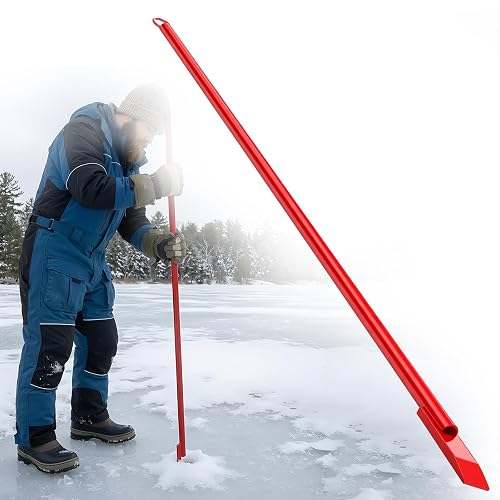
A spud bar is a heavy, pointed pole used to test ice in front of you. Strike the ice with each step; a clear ring and no give usually indicates solid ice, while a dull thud, slush or water splash means you should back off. An auger or drill can also measure thickness directly by drilling a test hole and measuring with a tape or ruler.
Dry Bag and Spare Dry Clothing
If you do go through, the first priority is getting out, the second is getting warm. A waterproof bag with dry layers, a hat, gloves and wool socks kept in your vehicle or shelter can make a large difference in the minutes after a fall. Change out of wet clothes as soon as you are safe.
How to Check Ice Thickness Before You Fish
Thickness guidelines are a starting point, not a guarantee. The numbers below are widely cited by safety agencies for clear, new ice. Snow cover, moving water and temperature changes all reduce safe thickness.
| Ice Thickness (Clear Ice) | Typical Guidance |
|---|---|
| 2 inches or less | Stay off. Not safe for walking or fishing. |
| 4 inches | Generally considered the minimum for walking or ice fishing alone, per many state agencies. |
| 5 to 7 inches | Often cited as suitable for small groups or snowmobiles, depending on agency guidance. |
| 8 to 12 inches | Commonly cited range for larger vehicles, per many state safety recommendations. |
Check your specific lake’s conditions with local bait shops, state wildlife agencies, or fishing groups, because local history matters. Measure ice in several spots, not just one.
Step-by-Step: Using Safety Gear Correctly
- Before leaving home: Check current ice reports, weather and water levels. Tell someone your location and expected return time.
- Pack your gear: Place ice picks, rope, spud bar and a dry bag where you can reach them without unpacking the sled.
- Dress for the water: Wear flotation if you have it, and layer so that wet clothes do not become heavy and cold.
- Test the ice as you walk: Tap ahead with the spud bar, keep spacing between anglers, and avoid dark or slushy patches.
- Drill and measure: Check thickness at each new location before setting up.
- If you fall through: Do not stand up in deep water. Kick and pull yourself onto the ice using your picks, roll away from the hole, then crawl or roll to shore.
- Get warm fast: Remove wet outer layers, change into dry clothing, and seek heat. Seek medical care if you were submerged for more than a short time or feel unwell.
Common Mistakes
- Relying on snow-covered ice without testing the layers underneath.
- Keeping ice picks in a sled or bag instead of on your body.
- Fishing alone in unfamiliar areas or near inlets, outlets and springs.
- Treating a single ice measurement as proof the whole lake is safe.
- Carrying a vehicle or heavy sled onto ice that only meets the minimum for foot travel.
- Ignoring weather changes such as warm spells, rain, or wind that can weaken ice quickly.
Tips for Safer Trips
- Fish with a partner and agree on a check-in plan.
- Keep your phone in a waterproof case, and know whether you have signal at your spot.
- Pack a small first-aid kit and a whistle.
- Recheck thickness after any warm day or heavy snowfall.
- Use your shelter or sled as a safe, stable place to rest, not as a reason to stop watching the ice.
Recommended gear
Ice picks are one of the most useful, low-complexity items you can carry, and several well-known makers offer models designed to be worn around the neck. View on Amazon
A purpose-built ice-fishing flotation suit is a common choice for anglers who want buoyancy built into their clothing rather than an extra item to remember. View on Amazon
A throw rope with a bag gives a companion a way to reach you without stepping onto weak ice. View on Amazon
A spud bar helps you test the ice in front of you with each step, making it easier to spot thin or soft areas before you commit your weight. View on Amazon
For more on the equipment that goes with your safety kit, see Best Ice Fishing Sleds for hauling gear safely and Best Ice Fishing Shelters for a stable, warm base once you are set up. If you use an auger, review K Drill Ice Auger: How to Use One Safely and Efficiently (Step-by-Step) to avoid common drilling hazards. Anglers who rely on tip-ups should also read Best Ice Fishing Tip-Ups to plan their setup around safe spacing.
FAQ
What is the most important piece of safety gear for ice fishing?
Ice picks are often considered the most essential because they are inexpensive, lightweight and let you self-rescue if you break through. Wearing them around your neck makes them reachable in an emergency.
Is 4 inches of ice safe for ice fishing?
Many state agencies cite 4 inches of clear, solid ice as a minimum for walking or fishing on foot. However, this is a general guideline. Snow cover, currents and recent warm weather can make ice less safe even when it measures thicker.
Do I need a flotation suit or is a life jacket enough?
Either can help. A flotation suit provides buoyancy automatically, while an inflatable life jacket requires activation. Choose a product rated for cold water and wear it on the ice, not just in your vehicle.
What should I do if I fall through the ice?
Stay calm, kick and use your ice picks to pull yourself onto the ice, then roll away from the hole. Once out, remove wet outer layers, change into dry clothing, and get to a heat source. Seek medical care if you were submerged for an extended time or feel unwell.
Can I rely on a spud bar alone to judge ice?
A spud bar is a useful test tool, but it does not measure thickness on its own. Use it alongside a drilled test hole and local ice reports for a more complete picture.
Should I fish alone?
Fishing with a partner is safer, especially on unfamiliar lakes. If you must fish alone, tell someone your location and expected return time, carry a rescue rope if possible, and stay in shallower, well-known areas.
Does snow on the ice make it safer?
Not necessarily. Snow insulates the ice and slows freezing, which can leave the ice underneath thinner than it looks. Always check thickness under the snow before walking or setting up.
How often should I check ice conditions?
Check before every trip and again after warm spells, rain, or heavy snowfall. Conditions can change within a day, even on lakes that were safe the previous week.
Conclusion
Good safety gear for ice fishing combines a few reliable items: ice picks, flotation, a rescue rope, a spud bar and dry clothing. Pair that kit with careful ice testing and a check-in plan, and most of the risk on the ice drops considerably. Always verify local conditions with trusted sources before you head out.