As an Amazon Associate I earn from qualifying purchases. This page may contain affiliate links.
Accessories for ice fishing are the small, practical gear that turns a cold morning on the lake into a productive day. A good auger or rod gets most of the attention, but the right sled, ice scoop, bucket, light, and safety gear decide how comfortable you are, how fast you move between holes, and whether you get home in one piece. The picks below were chosen by comparing manufacturer specifications, brand reputation, and the patterns that owners tend to describe in their feedback. Each item was judged on how well it solves a specific hard-water problem, how durable its construction appears to be, how much it adapts to different ice conditions, and how easy it is to use with gloves on. We did not field-test these products ourselves, so treat the notes as research-based guidance rather than first-hand reports.
Our Top Picks
Quick Comparison
| Product | Best for | Key feature |
|---|---|---|
| Eskimo Hard Water Ice Scoop | Clearing slush and snow from holes | Wide, flat-edged blade for fast cleanup |
| Frabill Ice Fishing Bucket | Carrying gear and sitting on the ice | Sturdy molded base with a built-in lid |
| Clam Ice Fishing Sled | Hauling heavy loads over snow and ice | Wide runners and a tow-friendly frame |
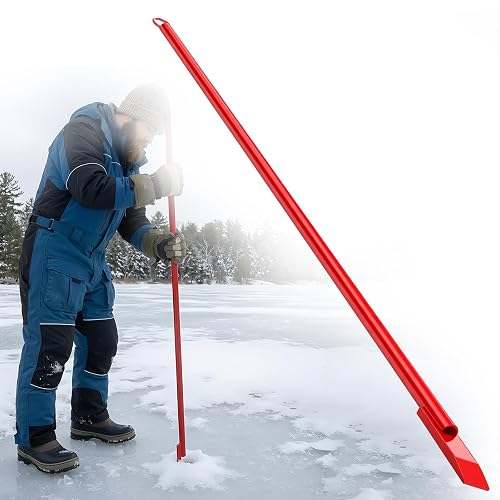
| Strikemaster Lazer Ice Spud Bar | Testing ice thickness and chopping holes | Adjustable length with a sharp tip |
| Eskimo Ice Cleats | Walking safely on slick ice and snow | Pull-on spikes that fit most boots |
| Vexilar FL-20 Flasher | Locating fish and seeing lure response | Sensitive sonar display for jigging |
| Coleman LED Lantern | Lighting the shelter and camp at night | Bright, long-running battery output |
| Eskimo Hand Warmer Pouch | Keeping fingers working in cold wind | Reusable warmer that fits inside gloves |
Eskimo Hard Water Ice Scoop
This scoop suits anglers who fish the same holes repeatedly and need to clear slush quickly without bending over. Anglers who drill many holes per outing tend to appreciate the wide blade.
Key specs
- Wide, flat-edged stainless steel blade
- Long handle designed for reaching across a hole
- Ice-scraping edge suited to slush and fresh freeze-up
Pros
- Clears slush efficiently between jigging sessions
- Long handle keeps your back straighter
- Simple design with few parts to fail
Cons
- Less useful on thick, hard ice that needs chopping
- Blade can collect debris that needs rinsing
Frabill Ice Fishing Bucket
Anglers who want one container for gear, bait, and a seat will find this bucket practical. It works well for shore-based anglers and those who walk short distances to their spot.
Key specs
- Molded, impact-resistant plastic construction
- Built-in lid for storing tackle
- Sized to hold common ice rods and small accessories
Pros
- Doubles as a seat during long sessions
- Lid keeps snow and debris out of tackle
- Rugged plastic handles cold, rough handling
Cons
- Plastic can crack if dropped on hard ice in extreme cold
- Limited space for larger shelter gear
Clam Ice Fishing Sled
This sled is aimed at anglers who haul rods, a flasher, a heater, and a tackle box across a long walk to open water. It is a good match for those who fish reservoirs or large lakes where access requires distance.
Key specs
- Wide runners for stability on snow and soft ice
- Frame designed for tying down gear
- Pull handle suited to hand or strap towing
Pros
- Carries heavy loads without tipping easily
- Wide runners reduce sinking in snow
- Useful for dragging gear across rough ice
Cons
- Bulky to store in a small vehicle
- Can be awkward to pull up steep banks
Strikemaster Lazer Ice Spud Bar
Anglers who test ice thickness before stepping out or who chop holes by hand will value a spud bar. It fits anyone who fishes early-season or variable ice where safety checks matter.
Key specs
- Adjustable length to suit different heights
- Sharp, hardened tip for chopping and probing
- Lightweight shaft for repeated use
Pros
- Useful for checking ice thickness at each step
- Chops small holes without power equipment
- Adjustable shaft fits multiple users
Cons
- Requires physical effort on thick ice
- Tip can dull with heavy use on rough ice
Eskimo Ice Cleats
These pull-on cleats suit anyone walking on glazed lake ice, wet docks, or snow-covered slopes near shore. They are a sensible safety addition for older anglers or anyone who has slipped before.
Key specs
- Stretch rubber body with embedded metal spikes
- Designed to fit a range of boot sizes
- Pull-on design for quick application
Pros
- Improves grip on glare ice
- Easy to slip on and off
- Compact enough to carry in a pocket
Cons
- Spikes can wear down on pavement
- Fit varies with very large or very small boots
Vexilar FL-20 Flasher
Serious jiggers who want to read fish location and lure response in real time will find this flasher useful. It suits anglers who target walleye, crappie, or panfish where precise depth control matters.
Key specs
- LED-based sonar display for depth and fish arches
- Adjustable sensitivity and zoom settings
- Battery-powered operation for extended use
Pros
- Shows how fish respond to jigging
- Clear display for reading structure and depth
- Well-established brand with a wide user base
Cons
- Requires learning to interpret returns accurately
- Battery life drops in extreme cold
Coleman LED Lantern
This lantern is a practical choice for anglers who fish after dark, set up camp at night, or need light inside a shelter. It is a good fit for those who want steady, cold-tolerant illumination without a flame.
Key specs
- LED light source for low heat and long run time
- Battery-powered with a carry handle
- Adjustable brightness on most models
Pros
- Flameless operation suits enclosed shelters
- Light output is broad enough for a whole area
- Battery operation avoids fuel handling
Cons
- Batteries drain faster in deep cold
- Bulkier than a small headlamp
Eskimo Hand Warmer Pouch
Anglers whose fingers go numb in wind or while tying knots will benefit from a reusable warmer. It suits those who spend long periods jigging with bare hands or working small terminal tackle.
Key specs
- Reusable pouch that holds a heat source
- Compact shape for placement inside gloves or pockets
- Designed for repeated use across a season
Pros
- Helps keep fingers working for delicate tasks
- Reusable design reduces waste
- Slips easily into most gloves
Cons
- Heat output fades over a long outing
- Does not replace proper insulated gloves
Buying Guide
Choosing accessories for ice fishing comes down to how you fish, where you fish, and how much you carry. Start by listing the tasks you repeat most often: clearing holes, walking to spots, locating fish, lighting your setup, and staying warm. Then match gear to those tasks rather than buying everything at once.
Selection Criteria
- Purpose: Does the item solve a real problem on your typical outing?
- Durability: Hard-water gear faces cold brittleness, moisture, and abrasion. Look for impact-resistant plastics, stainless steel, and corrosion-resistant hardware.
- Compatibility: Check that items work with your rods, auger, shelter, and boots.
- Ease of use with gloves: Latches, straps, and knobs should be operable with thick gloves on.
Important Features
For sleds and buckets, focus on load capacity and stability. For spud bars and scoops, length and blade or tip design matter most. For electronics such as flashers and lanterns, battery type, display clarity, and cold-weather rating are the key checks. Manufacturers typically list operating temperature ranges in their specifications, and those numbers are worth comparing against your local conditions.
Specs to Check
- Operating temperature range for battery-powered devices
- Material type (molded plastic, stainless steel, aluminum)
- Weight and dimensions for transport
- Battery type and runtime estimates
- Warranty terms, which often indicate manufacturer confidence
Choosing by Need
If you walk long distances, prioritize a sled and cleats. If you drill many holes, a scoop and spud bar will save time. If you fish after dark, a lantern is more useful than any other single item. Anglers who target finicky species should consider a flasher before buying extra terminal tackle. Build your kit in that order rather than buying every item in the category.
Things to Watch Out For
- Cheap plastic that becomes brittle at very low temperatures
- Battery electronics that lose much of their runtime in deep cold, so carry spares
- Oversized sleds that are hard to store or tow across narrow access points
- Ice safety: no accessory replaces checking ice thickness and following local guidance. Consult local authorities and a professional guide for current ice conditions before venturing out.
For more gear ideas by category, see Best Ice Fishing Sleds, Best Ice Fishing Gloves, and 10 Best Ice Fishing Flashers. If you are building a complete setup around a shelter, Best Ice Fishing Shelters covers the main options.
FAQ
What accessories should a beginner buy first for ice fishing?
Start with ice cleats for safety, a spud bar for checking ice, and a bucket or sled to carry gear. A flasher and lantern can come later once you know which fish you target and how you fish after dark.
Do I need a sled if I only fish close to shore?
Not always. A bucket or small tote may be enough for short walks. A sled becomes useful when you carry heavier loads or walk across snow-covered or uneven ice.
How thick should ice be before I walk on it?
Guidance varies by region and ice type, and clear ice behaves differently from snow ice. Local fisheries agencies and conservation departments publish current recommendations. Consult them before any outing.
Are battery-powered flashers and lanterns reliable in very cold weather?
Most manufacturers list an operating temperature range. Battery capacity drops in deep cold, so keep batteries warm in an inside pocket and carry spares. Check the specifications for your expected conditions.
Can hand warmers replace insulated gloves?
No. Warmers can help with dexterity during short tasks, but they are a supplement. Insulated, windproof gloves remain the main protection against cold.
Do I need a spud bar if I use a power auger?
A spud bar is still useful for testing ice thickness along your route and for clearing a hole that the auger has not fully broken through. It is a low-cost safety tool that many anglers keep regardless of their auger type.
What is the difference between a bucket and a sled for carrying gear?
A bucket is compact and doubles as a seat, which suits short trips. A sled distributes weight across runners and handles longer walks and heavier loads, making it better for large setups.
Conclusion
The right accessories for ice fishing depend on your access, species, and the conditions you face most often. Anglers who walk far should start with a sled and cleats. Those who drill many holes will value a scoop and spud bar. Jiggers who target fish by depth will get the most from a flasher, while night anglers should prioritize a lantern. Build your kit around the tasks you repeat, check specifications for cold-weather performance, and always prioritize ice safety.