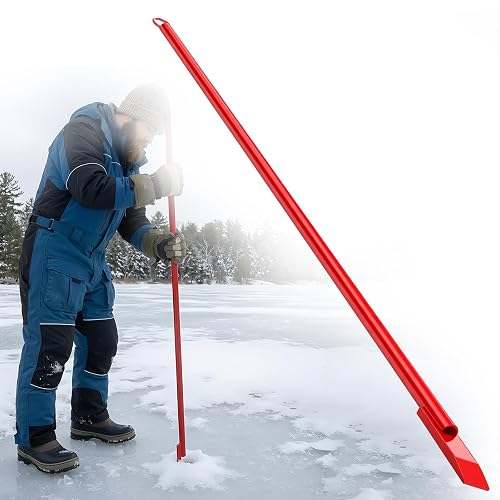
Quick answer
Our overall pick is the Yaktrax Diamond Grip for its all-surface traction and durable steel alloy construction. Other picks suit those needing aggressive studs for deep snow, easy indoor transitions, or a secure fit over bulky winter work boots.
Walking on ice and snow demands reliable traction to prevent slips and falls. The best ice cleats provide a secure grip tailored to different winter activities and footwear. We compared manufacturer specifications for 12 models to help you find the right traction aid for your needs.
From full-foot crampons to rotatable mid-sole cleats, the options vary in spike material, coverage, and ease of use. Choosing the right pair depends on your typical terrain, boot type, and need for transitions indoors.
Quick picks
- Best overall traction: Yaktrax Diamond Grip All-Surface Traction Cleats (see on Amazon)
- Best secure toe-cap fit: ICETRAX V3 Tungsten Crampons (see on Amazon)
- Best for indoor/outdoor transitions: GGS Anti-Slip Ice Cleats (see on Amazon)
- Best for deep snow: Winter Walking High-Pro Ice Cleat (see on Amazon)
12 Best Ice Cleats compared
| # | Product | Best for | Traction Points | Cold-Resistant Material | Size/Fit |
|---|---|---|---|---|---|
| 1 | Yaktrax Diamond Grip All-Surface Traction Cleats | Best overall for all-surface traction and durability | Diamond beads | Cold-resistant rubber | Large (W 10.5+/M 9.5-12.5) |
| 2 | STABILicers Walk Traction Cleat | Best full-sole coverage with heat-treated steel | Steel traction plates | Thermoplastic elastomer (to -45°F) | Medium |
| 3 | Cimkiz Crampons Ice Cleats | Best with 19 stainless steel spikes per foot | 19 stainless steel spikes | Thermoplastic elastomer (to -45°C) | Large |
| 4 | Aliagle Ice Cleats | Best for mixed teams with four precise sizes | 8 manganese steel studs | TPE (to -45°C) | S M L XL |
| 5 | WIN.MAX Crampons for Shoes | Best with 19 spikes and thick TPE material | 19 stainless steel spikes | Thermoplastic elastomer | X-Large |
| 6 | SILANON Ice Snow Cleats | Best with plum-shaped stainless steel studs | 9 stainless steel studs | Cold-resistant rubber | Large(7.5-10 men/9-11 women) |
| 7 | GGS Anti-Slip Ice Cleats | Best for easy indoor transitions with rotation | 7 tungsten carbide studs | Not listed | One Size |
| 8 | K1 Mid-Sole Ice Cleats | Best hi-vis mid-sole cleat for work boots | 10 tungsten carbide spikes | Not listed | O/S |
| 9 | VanRolldex Mid-Sole Ice Cleats | Best adjustable mid-sole cleat with tungsten studs | 7 tungsten carbide studs | Thicker rubber (to -45°C) | Large/X-Large_1 Pair |
| 10 | ICETRAX V3 Tungsten Crampons | Best secure fit with a StayON toe cap | 9 tungsten carbide spikes | Not listed | S/M (Men: 5-9/ Women: 6.5-10.5) |
| 11 | Winter Walking Low-Pro Ice Cleat | Best low-profile industrial traction | 26 tungsten carbide studs | Not listed | Large |
| 12 | Winter Walking High-Pro Ice Cleat | Best aggressive tread for deep snow | 26 tungsten carbide studs | Not listed | Large |
How we chose
We compared manufacturer listings and specifications on Amazon as of November 2026. We did not test, use, or review any products hands-on. Our picks are based on comparing listed features like traction material, coverage design, size range, and stated durability claims.
We focused on specs that matter for safety and performance: the type and number of traction points, the materials’ cold-weather flexibility, the fit system, and any design features for easy transitions.
Full-Foot Coverage Cleats
These models wrap around the entire sole of your boot for 360-degree traction.
1. Best overall for all-surface traction and durability: Yaktrax Diamond Grip All-Surface Traction Cleats

Pros
- Steel alloy diamond beads for traction
- Cold-resistant rubber stays flexible
- Full-foot-length stability
Cons
- The listing does not mention a rotatable feature for indoor use.
The Yaktrax Diamond Grip features patented diamond beads made from case-hardened steel alloy, strung on aircraft-grade steel cables. The cold-resistant natural rubber upper band is designed to stay flexible in sub-zero temperatures. Traction points extend across the entire foot length for stability on ice and snow.
Best for: Walkers who need reliable, all-surface traction for everyday winter activities.
2. Best full-sole coverage with heat-treated steel: STABILicers Walk Traction Cleat

Pros
- Heat-treated steel plates
- Tested to -45°F flexibility
- Full-sole coverage
Cons
- The listing does not mention a rotating feature for transitions.
STABILicers Walk cleats provide full-sole coverage with multi-directional, heat-treated steel traction plates molded into the heel and forefoot. The stretch-to-fit thermoplastic elastomer binding is tested to remain flexible down to -45 degrees Fahrenheit.
Best for: Everyday winter walking where full 360-degree traction and cold-weather flexibility are priorities.
3. Best with 19 stainless steel spikes per foot: Cimkiz Crampons Ice Cleats

Pros
- 19 stainless steel spikes
- TPE material rated to -45°C
- Includes carry bag
Cons
- The listing does not mention a rotatable or transitional feature.
Cimkiz Crampons feature 19 stainless steel spikes per foot on a firm chain system. The body is made from a 5mm thick thermoplastic elastomer (TPE) designed to maintain strong performance under -45°C. They include an adjustable strap and a carry bag.
Best for: Hikers or anglers on angled or mixed terrain who want maximum spike coverage.
4. Best for mixed teams with four precise sizes: Aliagle Ice Cleats
Pros
- Four precise sizes
- TPE tested to -45°C
- Fits standard and bulky boots
Cons
- The listing does not mention a rotatable feature.
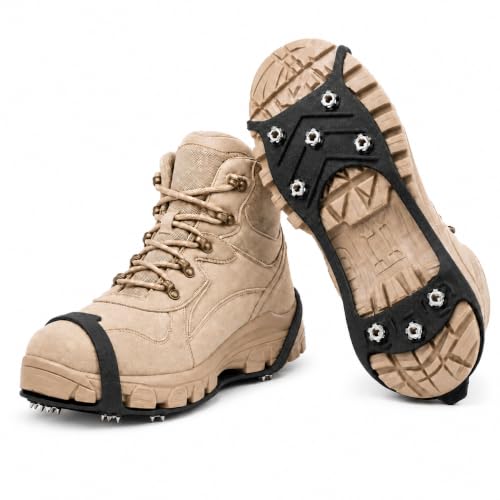
Aliagle Ice Cleats have 8 manganese steel studs (5 forefoot, 3 heel) mounted in stainless steel bases. The flexible TPE body is tested for flexibility down to -45°C. They are offered in four sizes (S-XL) to fit a wide range of standard and bulky winter footwear.
Best for: Teams or households with varied winter footwear, from sneakers to bulky insulated boots.
5. Best with 19 spikes and thick TPE material: WIN.MAX Crampons for Shoes

Pros
- 19 stainless steel spikes
- 5.49mm thick TPE material
- Includes carry bag
Cons
- The listing does not mention a specific cold-temperature flexibility rating.
WIN.MAX Crampons feature 19 high-strength stainless steel teeth per foot with a double chain design. The body is made from a 5.49mm thick thermoplastic elastomer (TPE) designed to maintain flexibility. They are portable and include a carry bag.
Best for: Hiking or climbing on icy trails where maximum spike penetration and material durability are key.
6. Best with plum-shaped stainless steel studs: SILANON Ice Snow Cleats

Pros
- 9 stainless steel studs
- 2.5mm thick cold-resistant rubber
- Includes storage bag
Cons
- The listing does not mention a rotatable feature.
SILANON Ice Cleats have 9 plum-shaped stainless steel studs evenly spread from toe to heel. They are made from a 2.5mm thicker cold-resistant rubber material designed for wear resistance and flexibility. They include a storage bag and are designed for easy on/off.
Best for: General winter walking and activities like ice fishing or snow shoveling.
Mid-Sole & Rotatable Cleats
Cleats that attach at the mid-sole, often with a rotating feature for easy transitions on and off ice.
7. Best for easy indoor transitions with rotation: GGS Anti-Slip Ice Cleats

Pros
- Rotatable for easy transitions
- 7 tungsten carbide studs
- Adjustable one-size strap
Cons
- The listing does not mention a specific cold-temperature flexibility rating.
GGS Anti-Slip Ice Cleats are mid-sole cleats with 7 tungsten carbide studs. Their key feature is a rotatable design, allowing the cleat pad to flip upward when not needed for easy indoor transitions, driving, or ladder climbing. They have an adjustable elastic strap for one-size fit.
Best for: People who frequently move between icy outdoors and indoor surfaces like delivery drivers or utility workers.
8. Best hi-vis mid-sole cleat for work boots: K1 Mid-Sole Ice Cleats
Pros
- 10 tungsten carbide spikes
- Hi-vis adjustable strap
- Facilitates indoor/outdoor use
Cons
- The listing does not mention a specific cold-weather flexibility rating.
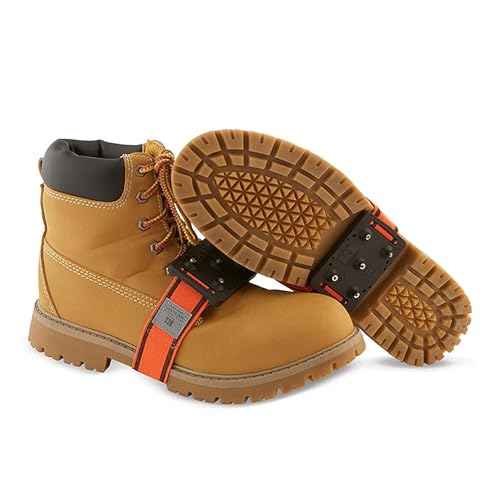
K1 Series Original Mid-Sole ice cleats have 10 tungsten carbide spikes per pair designed to penetrate ice without damaging surfaces. They fill the mid-sole space of a boot and feature a hi-vis adjustable strap. The design facilitates indoor, outdoor, and driving transitions.
Best for: Workers with mid-profile boots who need high-visibility traction for job sites.
9. Best adjustable mid-sole cleat with tungsten studs: VanRolldex Mid-Sole Ice Cleats

Pros
- 7 tungsten carbide studs
- Adjustable elastic strap
- Rated to -45°C
Cons
- The listing does not mention a hi-vis or reflective feature.
VanRolldex Mid-Sole Ice Cleats feature 7 tungsten carbide studs on a thicker rubber pad. They have an adjustable elastic strap for a one-size-fits-all fit and are designed for easy rotation and removal. The cleats are made for use in temperatures down to -45°C.
Best for: Those seeking a simple, adjustable mid-sole cleat with durable tungsten studs.
Heavy-Duty & Industrial Cleats
Models built with durable tungsten carbide studs for maximum traction in harsh conditions.
10. Best secure fit with a StayON toe cap: ICETRAX V3 Tungsten Crampons
Pros
- Tungsten carbide spikes
- StayON toe cap for secure fit
- Reflective heel for safety
Cons
- The listing does not mention a specific cold-temperature flexibility rating.
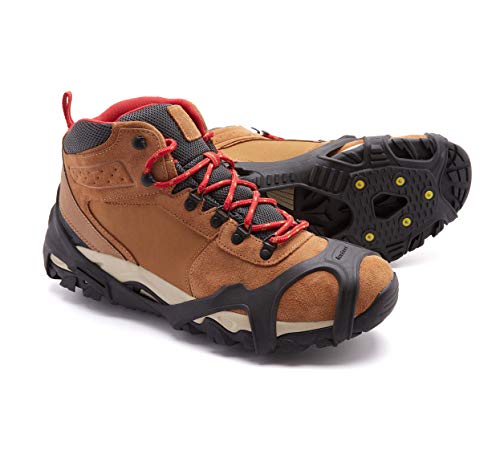
ICETRAX V3 cleats have 9 strategically placed tungsten carbide spikes for grip. The StayON toe cap design aims to prevent the cleats from falling off. They include a reflective heel panel for nighttime visibility and are designed for easy slip-on use.
Best for: Those who want a secure, non-slip fit on their footwear in low-visibility conditions.
11. Best low-profile industrial traction: Winter Walking Low-Pro Ice Cleat

Pros
- 26 tungsten carbide studs
- Dual elasticity for easy on/off
- Minimally exposed studs
Cons
- The listing does not mention a reflective element for visibility.
The Winter Walking Low-Pro Ice Cleat is a heavy-duty, industrial-grade traction aid. It features 26 permanent tungsten carbide studs for durability and is designed with minimally exposed studs for transitional traction. It uses a patent-pending dual elasticity system.
Best for: Industrial or work settings where low-profile, durable traction is needed.
12. Best aggressive tread for deep snow: Winter Walking High-Pro Ice Cleat

Pros
- 26 tungsten carbide studs
- Aggressive tread for deep snow
- Dual elasticity system
Cons
- The listing does not mention a specific cold-weather flexibility rating.
The Winter Walking High-Pro Ice Cleat is a heavy-duty option with 26 molded tungsten carbide studs and an aggressive tread pattern for deep snow traction. It uses a patent-pending dual elasticity system, with reduced elasticity in the sole for abrasion resistance.
Best for: Walking in deep snow or on uneven, packed ice where aggressive traction is necessary.
How to choose the best ice cleats
Selecting the right ice cleats involves matching the traction design to your typical winter terrain and footwear. The best ice cleats for a daily walk on an icy sidewalk differ from those needed for deep snow on a hiking trail or for a worker who moves in and out of buildings.
First, consider coverage. Full-foot cleats or crampons wrap around your entire boot sole, offering 360-degree traction ideal for consistent ice. Mid-sole cleats attach only at the arch, often with a rotating feature, making them practical for frequent indoor/outdoor transitions as they can be flipped up when not needed.
What to look for
- Traction Material: Look for the type of spike or stud. Tungsten carbide is extremely hard and durable for long-term use. Stainless steel offers strong penetration. Some models use steel alloy beads or plates for less aggressive, multi-surface traction.
- Cold-Weather Flexibility: Check the listed material and its temperature rating. Thermoplastic elastomer (TPE) and cold-resistant rubber are common and should be specified to remain flexible in sub-zero temperatures to prevent cracking.
- Fit and Size: Ensure the cleats are designed for your shoe or boot type and size. Some use elastic bands or stretchy materials for a one-size range, while others offer specific sizes for a more secure fit, especially over wide or bulky insulated boots.
- Transition Features: If you’ll be going indoors, consider a rotatable mid-sole design or cleats with minimally exposed studs to protect floors and allow for driving. For more on preparing for winter conditions, see our guide on ice fishing safety and general winter outdoor tips.
Always follow the manufacturer’s instructions for putting on, using, and maintaining your ice cleats. Inspect them before each use for worn studs or damaged bands to ensure they provide safe traction. For comprehensive safety information, consult resources like the National Weather Service’s cold weather safety page.
FAQ
Can I wear ice cleats while driving?
You should never drive a vehicle while wearing ice cleats. The metal studs can interfere with pedal control and are a safety hazard. If you need to drive, use ice cleats with a rotatable mid-sole design that allows you to flip the traction pad upward, or remove them entirely before getting behind the wheel.
How do I know what size ice cleats to get?
Refer to the manufacturer’s size chart, which is usually based on your standard shoe size. Pay close attention if the listing specifies fits for “wide” or “bulky” boots, as you may need to size up. Some models use an adjustable elastic strap system designed to fit a range of sizes.
How long do ice cleats typically last?
Durability depends on the materials (like tungsten carbide vs. steel), construction, and frequency of use on abrasive surfaces like concrete. Listings for durable models often mention features like case-hardened steel, aircraft-grade cables, or molded studs. Inspect the traction points and bands regularly for wear.
Can ice cleats damage my floors?
Yes, cleats with exposed metal studs can scratch and damage indoor flooring like hardwood, tile, or laminate. For indoor use, look for models specifically designed for transitions, such as those with a rotatable feature or “minimally exposed” studs. It’s often safest to remove them before walking indoors.
References
- Amazon product listings and manufacturer specifications (accessed November 2026)
- National Weather Service – Cold Weather Safety